
Bitcoin IRA Annuity Options: Tax-Advantaged Retirement Income With Bitcoin Exposure
Bitcoin IRA annuities combine bitcoin exposure, tax advantages, and annuity income features, offering growth potential with retirement income structure.

Buy Bitcoin with Zero Fees with Rhino
The most secure way to stack sats. Simple, fast, and zero trading fees.
Bitcoin IRA annuity options combine the tax advantages of Individual Retirement Accounts (IRAs) with bitcoin exposure and guaranteed income features offered through annuities.
These specialized retirement products allow investors to hold bitcoin inside tax-advantaged accounts.
They also aim to provide predictable income during retirement. However, these products are still relatively uncommon and can be complex financial instruments.
Key Summary: Bitcoin IRA annuity options combine cryptocurrency investing with traditional annuity income guarantees inside tax-advantaged retirement accounts. They aim to offer growth potential along with retirement income security.
Key Takeaways
- Bitcoin IRA annuities combine cryptocurrency exposure with guaranteed income features
- Tax advantages depend on the IRA type (Traditional, Roth, SEP, or SIMPLE)
- Regulatory complexity and limited provider availability create challenges
- Fee structures are usually higher than traditional retirement products
What Is a Bitcoin IRA Annuity?
A Bitcoin IRA annuity is a retirement account structure that holds bitcoin or bitcoin-backed investments inside an annuity contract within an IRA.
This layered structure combines:
- The tax benefits of IRAs
- The growth potential of bitcoin
- The income guarantees of annuities
Traditional annuities provide guaranteed income payments for life or for a set period.
When paired with bitcoin holdings, these products aim to offer cryptocurrency exposure while reducing volatility through structured payout methods.
For a full overview of Bitcoin retirement accounts, see our complete Bitcoin IRA investing guide.
Annuity: A financial contract that provides regular income payments in exchange for an initial lump sum or a series of payments. Annuities are commonly used to create retirement income.
IRS annuity guidance
The Internal Revenue Service treats bitcoin as property for tax purposes. This is outlined in IRS Notice 2014-21.
Annuity Provides Income for Individuals After Retirement
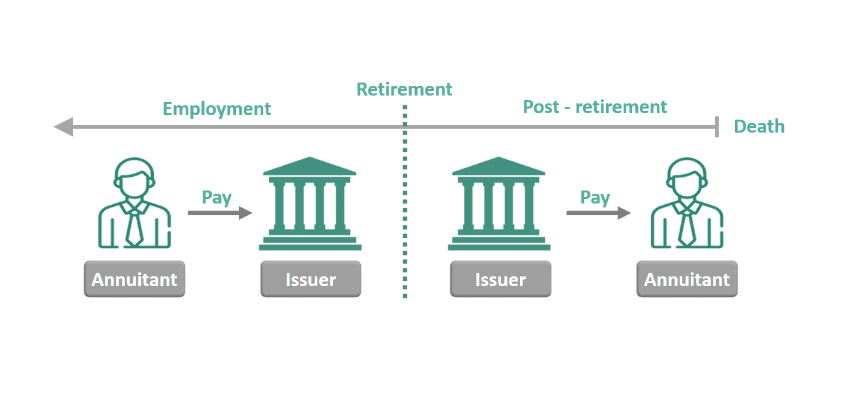
Because of this classification, bitcoin can be held inside self-directed IRAs, including annuity structures, as long as IRS rules are followed.
How Bitcoin IRA Annuities Differ From Standard Bitcoin IRAs
Standard Bitcoin IRAs allow investors to own cryptocurrency directly inside retirement accounts. These accounts do not include guaranteed income features.
Bitcoin IRA annuities add an insurance component. This component promises specific payment amounts, regardless of bitcoin price changes.
Key differences include:
- Income guarantees: Annuities provide minimum payments; standard IRAs do not
- Liquidity limits: Annuities often lock funds during surrender periods
- Fee structure: Annuities include insurance and administrative fees
- Investment control: Standard IRAs offer more flexibility and control
Types of Bitcoin IRA Annuity Structures
Bitcoin IRA annuities come in several forms. Each structure differs based on payout timing, guarantee features, and how bitcoin exposure is handled.
These options serve different retirement goals and risk tolerance levels.
Fixed Annuities With Bitcoin Backing
Fixed annuities guarantee specific payment amounts, regardless of how underlying assets perform.
Some insurance companies have explored designs where part of the premium is invested in bitcoin, while still guaranteeing minimum returns.
These products typically work by:
- Allocating part of the premium to bitcoin holdings
- Using conservative assets, such as bonds, to support guaranteed payments
In this structure, the insurance company assumes the risk if bitcoin underperforms. The insurer benefits if bitcoin performs well.
As of early 2025, only a small number of insurance carriers offer these products. Availability also depends on state regulations.
Variable Annuities With Bitcoin Sub-Accounts
Variable annuities allow investors to choose from multiple investment sub-accounts.
Some contracts now include bitcoin-linked sub-accounts or cryptocurrency index options.
Payment amounts change based on how the selected sub-accounts perform:
- If the bitcoin sub-account increases in value, payments rise
- If bitcoin declines, payments fall
Optional riders can be added for an extra cost. These riders may provide downside protection.
Key phases include:
- Accumulation phase: Funds grow tax-deferred based on selected investments
- Distribution phase: Payments begin based on account value and payout choices
- Optional riders: Income guarantees or withdrawal benefits at added cost
Indexed Annuities Linked to Bitcoin Performance
Indexed annuities credit interest based on a market index while protecting the principal.
Some newer products use bitcoin price indexes as their benchmark.
These annuities usually:
- Allow participation in bitcoin gains up to a set cap
- Protect against losses during negative performance years
For example:
- If bitcoin rises 30%, the annuity may credit 10%
- If bitcoin falls 30%, the account value does not decline
Participation Rate: The portion of index gains credited to an indexed annuity. Rates often range from 50% to 100% of gains, up to a defined cap.
Tax Advantages of Bitcoin IRA Annuities
Bitcoin IRA annuities provide the same tax benefits as other IRA-based retirement accounts.
Depending on the IRA type, investors can benefit from:
- Tax-deferred growth
- Or tax-free distributions
Understanding these rules is critical for effective retirement planning.
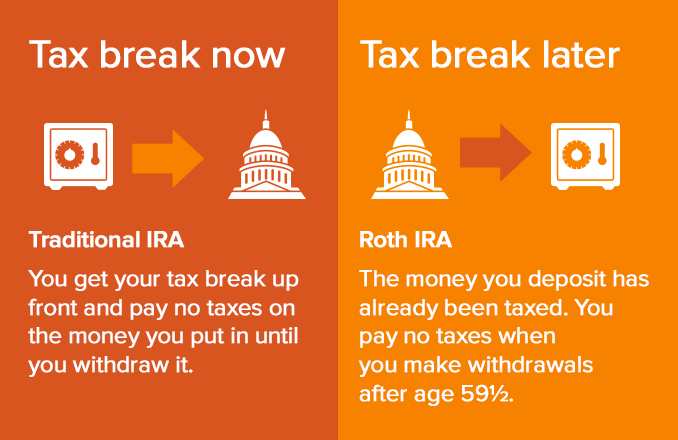
Traditional IRA Tax Treatment
Contributions to Traditional Bitcoin IRA annuities may be tax-deductible. This depends on income limits set by the IRS, outlined in the IRS contribution guidelines.
Account growth is tax-deferred. Distributions are taxed as ordinary income.
For 2024:
- Contribution limit: $7,000 per year
- Age 50+: $8,000 per year
These limits apply across all Traditional IRAs combined.
Required Minimum Distributions (RMDs) begin at age 73 under current law.
Roth IRA Tax Benefits
Roth Bitcoin IRA annuities are funded with after-tax dollars.
Qualified withdrawals are completely tax-free. This can be especially beneficial if bitcoin appreciates significantly over time.
For 2024:
- Single filers must have modified adjusted gross income below $161,000 for full contributions
Qualified distributions require:
- The account to be open for at least five years
- The account holder to be age 59½ or older
Additional benefits include:
- No RMDs: No required distributions during the owner’s lifetime
- Tax-free growth: Bitcoin gains are not taxed
- Estate benefits: Assets pass to heirs tax-free
How Taxes work in Traditional vs Roth IRAs
SEP and SIMPLE IRA Options
Self-employed individuals and small business owners may use SEP or SIMPLE IRAs with bitcoin annuities.
These accounts allow higher contribution limits.
For 2024:
- SEP IRAs: Up to 25% of compensation or $69,000, whichever is less
- SIMPLE IRAs:
- $16,000 in employee deferrals
- $19,500 for those age 50 and older
- Plus employer contributions
Key Risks and Considerations
Bitcoin IRA annuities combine cryptocurrency risk with annuity complexity.
Understanding these risks is essential before committing retirement funds.
Volatility and Market Risk
Bitcoin remains highly volatile, even as the market matures.
Price swings of 20% or more over short periods are common.
While annuity guarantees may limit losses, gains are often capped. This can reduce upside potential.
Historical performance shows extreme cycles. Between November 2021 and November 2022, bitcoin fell by roughly 75%.
Such volatility can be especially risky for retirees relying on income.
Fee Structure Complexity
Bitcoin IRA annuities often include multiple layers of fees. Over time, these costs can significantly reduce returns.
Common fees include:
- Custodian fees: $200–$500 annually
- Bitcoin asset fees: 1–2% per year
- Annuity mortality and expense fees: 1–1.5% annually
- Rider fees: 0.5–1% or more
- Surrender charges: Early withdrawal penalties over 5–10 years
Total annual costs can exceed 3–4% before any bitcoin gains are realized.
Regulatory and Custody Challenges
Bitcoin IRA annuities must comply with both:
- IRS retirement account rules
- State insurance regulations
Not all insurers can offer these products in every state.
IRS prohibited transaction rules are strict. Using IRA-held bitcoin for personal use, borrowing improperly, or transacting with disqualified persons can trigger taxes and penalties.
Prohibited Transaction: Any improper use of an IRA by the owner, beneficiary, or disqualified person. These actions can result in immediate taxation and penalties under
IRS prohibited transaction rules.
How to Evaluate Bitcoin IRA Annuity Providers
Choosing a provider requires careful research.
Only a limited number of companies offer these products, and quality varies.
Provider Credentials and Security
Confirm that the insurance company:
- Is licensed in your state
- Has strong financial ratings from AM Best, Moody’s, or Standard & Poor’s
Insurance guarantees are only as reliable as the insurer providing them.
For bitcoin custody, confirm the use of qualified custodians with strong security, such as:
- Cold storage
- Multi-signature wallets
- Digital asset insurance
Questions to ask include:
- What are the company’s financial ratings?
- How is bitcoin custody handled?
- What insurance protects digital assets?
- Has the company faced security or regulatory issues?
Contract Terms and Flexibility
Always review annuity contracts carefully.
Pay attention to:
- Surrender periods
- Liquidity rules
- Payout options
- Guarantee conditions
Surrender periods usually last five to ten years. Early withdrawals may incur penalties of 7–10%, which decline over time.
Indexed products often include participation rates, caps, and spreads. For example, 80% participation with a 10% cap and a 2% spread can significantly limit returns.
Alternatives to Bitcoin IRA Annuities
Bitcoin IRA annuities are not the only way to gain crypto exposure in retirement accounts.
Several alternatives may offer lower costs or greater flexibility.
Self-Directed Bitcoin IRAs
Self-directed IRAs allow direct bitcoin ownership without annuity contracts.
These accounts:
- Offer greater control
- Typically have lower fees
- Do not include income guarantees
Annual fees are often $200–$400, plus trading costs.
However, investors face full bitcoin volatility and must manage the account actively. There are no surrender charges, and liquidity is higher, subject to IRA rules.
Bitcoin ETFs in Traditional IRAs
In early 2024, several Bitcoin spot ETFs began trading on major U.S. exchanges.
These ETFs can be held inside standard brokerage IRAs.
Key advantages include:
- Lower fees: 0.20%–0.50% annually
- High liquidity: Traded throughout market hours
- Established custodians: Major brokerage firms
- Transparency: Daily disclosures
Bitcoin ETFs do not offer income guarantees. They closely track bitcoin prices, minus management fees.
Combination Strategies
Some investors use multiple approaches rather than relying on a single product.
A combination strategy may spread risk across different vehicles.
For example:
- 60% in low-cost Bitcoin ETFs
- 30% in self-directed Bitcoin IRAs
- 10% in annuities providing guaranteed income
This approach diversifies both investment and income sources.
Bitcoin IRA Annuities and Estate Planning
Annuity-based retirement accounts require careful estate planning.
Beneficiary rules can significantly affect after-tax inheritance.
Beneficiary Distribution Rules
The SECURE Act of 2019 changed inherited IRA rules.
Most non-spouse beneficiaries must withdraw the full account balance within ten years of the original owner’s death.
Annuity contracts may add additional restrictions. Some require lump-sum payments or shorter distribution periods, which can increase taxes.
Roth IRA annuities are more favorable. Withdrawals remain tax-free if the original account met the five-year rule.
Valuation and Transfer Considerations
Bitcoin valuation at death can be challenging due to price volatility.
The account value on the date of death may differ greatly from the value when distributions occur.
Annuity guarantees may help by setting minimum values. However, these guarantees apply to the contract value, not the underlying bitcoin itself.
Regulatory Outlook and Industry Evolution
The Bitcoin IRA annuity market is still developing.
Regulatory clarity continues to evolve.
State Insurance Regulation
Insurance regulation occurs at the state level.
Each state insurance commissioner must approve annuity products before they can be sold.
Bitcoin-linked annuities face additional scrutiny due to volatility and regulatory uncertainty.
As of early 2025:
- Fewer than a dozen insurers have approval
- Availability varies widely by state
- Some states have prohibited these products
IRS Guidance and Compliance
The IRS has issued limited guidance on cryptocurrency inside annuity structures.
General IRA rules apply, but questions remain around:
- Asset valuation
- Distribution calculations
- RMD compliance
Investors should confirm that providers have strong compliance procedures and consult tax professionals familiar with both crypto and retirement rules.
Frequently Asked Questions
Can I roll over an existing 401(k) into a Bitcoin IRA annuity?
Yes. Eligible 401(k) funds can be rolled into a self-directed IRA that holds a bitcoin annuity. Standard IRS rollover rules apply.
What happens if bitcoin goes to zero?
Guarantees depend on the contract and the insurer’s financial strength. Fixed annuities with guarantees should continue payments, subject to insurer solvency.
Are fees tax deductible?
No. IRA fees are not separately deductible. They reduce the account balance and future taxable distributions.
How do RMDs work?
RMDs begin at age 73 for Traditional IRAs. Payments or withdrawals can satisfy RMDs. Valuations use the December 31 balance from the prior year.
Can I have both a Bitcoin IRA annuity and a regular Bitcoin IRA?
Yes. However, contribution limits apply across all IRAs of the same type.
What is the minimum investment?
Most providers require $10,000–$50,000. Some require higher amounts due to complexity.
How is bitcoin priced?
Contracts specify a recognized bitcoin price index and valuation schedule, usually using daily closing prices.
Can I switch to direct bitcoin holdings?
Yes, but surrender charges may apply if the annuity is still within its surrender period. Proper custodian handling is required.
Conclusion
Bitcoin IRA annuities sit at the intersection of cryptocurrency, retirement planning, and insurance.
They offer tax benefits and income guarantees but involve higher fees, complexity, and limitations.
Before investing, consider:
- Whether the fees justify the guarantees
- How liquidity restrictions fit your needs
- Whether alternatives may be more suitable
- The insurer’s financial and regulatory standing
For investors seeking bitcoin exposure inside tax-advantaged retirement accounts, explore Rhino Bitcoin’s self-directed Bitcoin IRA options for flexibility without annuity complexity.
References
- Internal Revenue Service. “IRS Notice 2014-21: Virtual Currency Guidance.” https://www.irs.gov/pub/irs-drop/n-14-21.pdf
- Internal Revenue Service. “Retirement Topics – IRA Contribution Limits.” https://www.irs.gov/retirement-plans/plan-participant-employee/retirement-topics-ira-contribution-limits
- Internal Revenue Service. “Retirement Topics – Prohibited Transactions.” https://www.irs.gov/retirement-plans/plan-participant-employee/retirement-topics-prohibited-transactions
- Internal Revenue Service. “Annuities – A Brief Description.”
- CME Group. “CME CF Bitcoin Reference Rate.”
Important Disclaimers
Disclaimer: Educational information only. Not financial, legal, medical, or tax advice.
Risk Warnings: All investments carry risk, including loss of principal. Past performance does not guarantee future results. Bitcoin is volatile and may not suit all investors.
Conflicts of Interest: Rhino Bitcoin provides Bitcoin financial services. This content is educational and may reference company products.
.png)
.png)