
Lightning Network Tor Integration: Secure Private Bitcoin Banking Guide
Using Tor with the Lightning Network hides IP addresses, blocks surveillance, and adds powerful network-level privacy to Bitcoin payments.
Buy Bitcoin with Zero Fees with Rhino
The most secure way to stack sats. Simple, fast, and zero trading fees.
Lightning Network Tor integration combines Bitcoin’s Layer 2 payment network with Tor’s privacy-focused routing system. It enables anonymous bitcoin transactions without revealing users’ IP addresses or geographic locations.
This setup addresses a key privacy weakness in standard Lightning Network usage. Without Tor, network participants can track payment routing patterns and link them to IP addresses.
Key Summary
Tor integration hides Lightning Network users’ IP addresses and geographic data during payment routing. This prevents network surveillance and improves privacy beyond Bitcoin’s pseudonymous blockchain.
Key Takeaways
- Tor hides your IP address when opening channels and sending Lightning payments
- Most major Lightning implementations support Tor natively
- Privacy gains come with trade-offs in speed and reliability
- Especially useful for users in restrictive regions or those prioritizing privacy
How Lightning Network Tor Integration Works
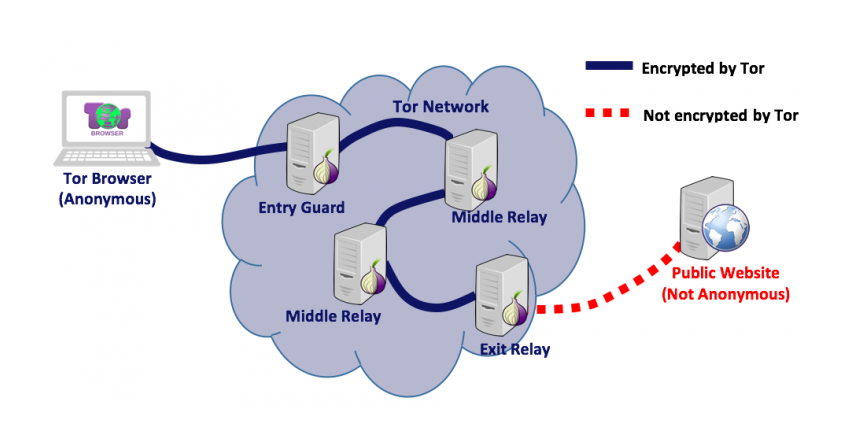
Lightning Network Tor integration routes all node communications through Tor’s encrypted relay network. When you run a Lightning node over Tor, your traffic passes through several volunteer-operated relays.
This process masks your real IP address from other network participants.
Lightning Software and Tor Support
The exact setup depends on the Lightning implementation you use.
- LND, Core Lightning, and Eclair all support Tor connectivity
- Each uses different configuration methods
- All allow full Lightning operation over Tor
Your Lightning node connects to the Tor network and receives a .onion address. This address is then used for peer connections and channel announcements.
Privacy Benefits of Tor Routing
Tor integration protects two main privacy areas:
- Channel privacy
Channel counterparties cannot see your geographic location when you open channels. - Routing privacy
Payment routing information stays separate from your network identity.
How Tor improves Lightning privacy:
- IP address masking: Your real location remains hidden
- Connection anonymization: Observers cannot link your node to physical infrastructure
- Routing privacy: Payment paths are not tied to geography
- Surveillance resistance: Network monitoring becomes far more difficult
Tor Network
Tor is a free, open-source privacy network. It anonymizes internet traffic by routing connections through multiple encrypted relays. This makes tracing communications back to their source extremely difficult.
Learn more at https://www.torproject.org/
Tor Routes Traffic Through its Network to Increase Privacy
Why Use Tor With Lightning Network?
Running Lightning over Tor solves several privacy issues in Bitcoin’s Layer 2 infrastructure. Standard Lightning usage exposes your IP address to channel peers and routing nodes.
This creates a surveillance risk that blockchain analysis alone cannot detect.
Beyond Simple IP Logging
The risk goes further than basic IP collection. Advanced network observers can:
- Correlate Lightning routing patterns with IP addresses
- Build profiles of spending behavior
- Infer geographic movement
- Identify commercial relationships
Tor integration breaks this chain of correlation.
For broader context, our complete guide to Lightning Network banking explains additional privacy and security considerations for everyday Lightning use.
Primary Reasons for Tor Integration
- Geographic privacy: Prevents peers from identifying your physical location
- Network surveillance resistance: Blocks ISPs and monitors from tracking activity
- Jurisdictional flexibility: Enables Lightning use in restrictive regions
- Identity separation: Disconnects Lightning usage from other online identities
- Stronger privacy stack: Adds network anonymity to Bitcoin’s pseudonymity
Setting Up Lightning Network Over Tor
Most Lightning implementations include native Tor support and require minimal setup.
General Setup Process
The process usually includes:
- Installing Tor
- Configuring Lightning to use Tor
- Creating a .onion address for inbound connections
Implementation-Specific Notes
- LND: Requires adding Tor flags to the lnd.conf file
- Core Lightning: Detects and configures Tor automatically via plugins
- Eclair: Uses configuration file options for Tor connectivity
Basic Setup Steps
- Install Tor: Download and run Tor on your node
- Configure Lightning: Add Tor-related settings to your config file
- Generate .onion address: Enable a hidden service for your node
- Restart the node: Apply changes
- Test connectivity: Confirm all traffic routes through Tor
Users should always verify Tor connectivity before opening channels or routing payments. Most Lightning software logs confirmation messages for Tor connections and .onion address creation.
Privacy vs Performance Trade-Offs
Tor integration improves privacy but affects performance.
Latency and Reliability
Tor adds latency because traffic passes through multiple encrypted relays. As a result:
- Connection latency increases
- Payment reliability can decrease slightly
Lightning payments rely on fast communication between routing nodes. Extra network hops can cause timeouts, especially on longer routes.
Performance Considerations
- Connection speed: Adds roughly 100–300 ms of latency
- Payment success: Slightly lower success rates on complex routes
- Channel opening: Longer negotiation times
- Peer discovery: Fewer connections to clearnet-only nodes
Privacy Benefits
- Full IP anonymization
- Protection against network monitoring
- Greater geographic freedom
- Separation from other online activity
For most personal Lightning users, privacy gains outweigh the performance cost. Routing nodes often prefer hybrid setups to maintain higher success rates.
Hybrid Configuration: Tor and Clearnet
Advanced users can run Lightning nodes that support both Tor and clearnet connections.
How Hybrid Nodes Work
Hybrid nodes announce:
- A clearnet IP address
- A .onion address
Peers choose which connection type to use. Outbound connections can use Tor only, while inbound connections remain flexible.
Benefits for Routing Nodes
This approach is especially useful for routing nodes that need high connectivity.
Your understanding of Lightning node operations can help determine whether this setup fits your goals.
Hybrid Configuration Advantages
- Maximum peer connectivity
- Flexible privacy and performance options
- Higher routing success than Tor-only nodes
- Privacy-friendly access for Tor users
Configuration Recommendations
- Choose Tor-only if: Privacy is the top priority
- Choose hybrid if: You want privacy without sacrificing reach
- Choose clearnet-only if: Performance matters more than IP privacy
Security Considerations for Tor Lightning Nodes
Running Lightning over Tor changes the security landscape.
Eclipse Attack Risk
Tor-only nodes may be more exposed to eclipse attacks. Attackers can create many .onion addresses more easily than acquiring diverse IP ranges.
However, Lightning’s gossip protocol and peer diversity reduce this risk in practice.
Maintaining connections across multiple Tor circuits provides strong protection.
Eclipse Attack
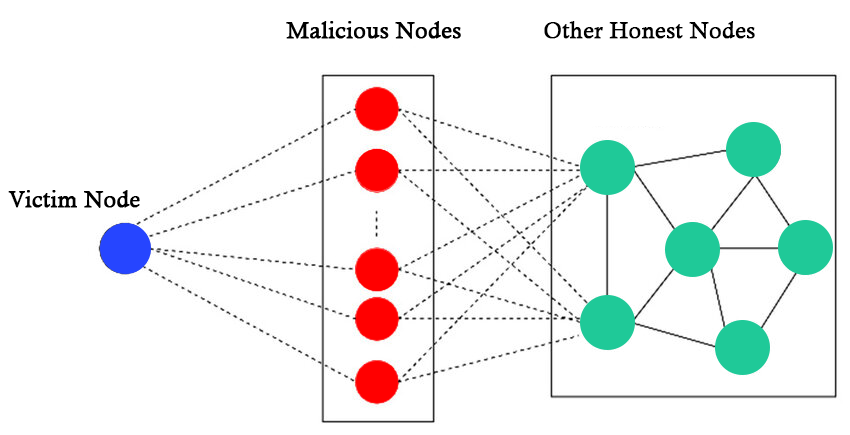
A network-level attack where a node is isolated by malicious peers. The attacker controls all connections and feeds false network data. Peer diversity is the main defense.
A Simple Graph Explaining an Eclipse Attack
Tor-Specific Security Practices
- Connection diversity: Maintain 8–10 peers
- Tor updates: Keep the Tor daemon fully updated
- Circuit checks: Ensure new Tor circuits are created regularly
- Peer verification: Cross-check channel data
- Backups: Store encrypted channel backups outside the Tor network
Tor Integration for Mobile Lightning Wallets
Mobile wallets face additional challenges when using Tor.
Mobile-Specific Limitations
- Increased battery usage
- Less reliable mobile connections
- Operating system background restrictions
Common Mobile Approaches
Some wallets use hybrid models:
- Phoenix and Breez rely on Lightning Service Providers
- Channel management is handled externally
- Tor is used mainly for payment privacy
This separates channel reliability from privacy concerns.
Full Non-Custodial Mobile Nodes
Wallets like Blixt run a full Lightning node on the device with native Tor support. This maximizes privacy and control but requires more battery and connection management.
Our guide on Lightning wallet options explains the full range of mobile and desktop choices.
Mobile Tor Considerations
- Battery usage increases by 15–30%
- Connection drops occur more often
- iOS limits background Tor activity
- Hybrid models balance privacy and usability
Regulatory and Jurisdictional Benefits
Tor integration helps users in regions with restrictive financial systems or heavy monitoring.
Benefits in Restrictive Environments
- Continued Lightning access despite ISP restrictions
- Reduced exposure to government-level surveillance
- Greater financial autonomy
Cross-Border Payments
Tor-enabled Lightning payments allow cross-border transfers without revealing location or routing details. This strengthens Lightning’s role in global financial inclusion.
However, Tor alone does not guarantee full anonymity.
Privacy Limitations
- On-chain channel funding can still be analyzed
- Blockchain analysis may link activity over time
For stronger privacy, users should combine Tor with:
- Careful UTXO management
- Coinjoin or similar privacy tools
Frequently Asked Questions
Basics and Understanding
What is the difference between Lightning privacy and Tor privacy?
Lightning keeps transactions off-chain. Tor hides your IP address and location. Together, they provide stronger privacy protection.
Do I need Tor to use Lightning Network?
No. Lightning works without Tor. However, your IP address is visible to peers unless Tor is used.
Can I use a VPN instead of Tor?
Yes. VPNs hide your IP address but require trusting a third party. Tor offers stronger anonymity with no single point of trust.
Technical Setup and Configuration
Which Lightning implementations support Tor?
LND, Core Lightning (CLN), and Eclair all support Tor. Mobile wallets like Phoenix, Breez, and Blixt also include Tor options.
Does Tor slow down Lightning payments?
Yes. Tor adds about 100–300 ms of latency. Most users consider this acceptable.
Can I run a routing node using Tor only?
Yes. Many routing nodes prefer hybrid setups to improve payment success rates.
Security and Privacy
Does Tor make my Lightning node fully anonymous?
No. Tor hides your network identity, but blockchain analysis can still reveal patterns. Full anonymity requires multiple privacy tools.
Are there extra risks when using Tor?
Eclipse attacks are theoretically easier. Maintaining diverse peer connections helps mitigate this risk.
Conclusion
Lightning Network Tor integration combines off-chain payment privacy with network-level anonymity. This addresses surveillance risks that Bitcoin’s blockchain privacy cannot solve alone.
Tor works across major Lightning implementations and is easy to configure. Users must balance privacy benefits with modest performance costs.
Hybrid configurations offer flexibility for those who want both privacy and connectivity.
Key Decision Factors
- Privacy needs versus performance expectations
- Technical ability to manage a node
- Local regulations and surveillance risks
- Mobile versus desktop usage
For those seeking private, instant bitcoin payments with institutional-grade security, explore Rhino Bitcoin’s Lightning-enabled banking platform at https://www.rhinobitcoin.com.
References
- Tor Project. “Tor Project: Anonymity Online.” https://www.torproject.org/
- Lightning Network. “Lightning Network Specifications (BOLTs).” https://github.com/lightning/bolts
- Bitcoin.org. “Bitcoin Developer Guide: Payment Channels.” https://developer.bitcoin.org/
- Lightning Labs. “LND Documentation: Tor Integration.” https://docs.lightning.engineering/
- Blockstream. “Core Lightning (CLN) Documentation.” https://lightning.readthedocs.io/
Important Disclaimers
Disclaimer: Educational information only. Not financial, legal, medical, or tax advice.
Risk Warnings: All investments carry risk, including loss of principal. Past performance is not indicative of future results. Bitcoin is volatile and may not be suitable for all investors.
Conflicts of Interest: Rhino Bitcoin provides Bitcoin financial services. This content is educational and may reference our products.
.png)
.png)